
Day 1
The best thing about going birding with someone new to it is watching the list matter more than it should. Every lifer lands like a small emergency. The binoculars go up fast, the ID comes slow, and the satisfaction is completely disproportionate to the bird. I had forgotten how good that feels from the outside.
This morning was a long time coming. I hadn’t been out in a while, and going with an enthusiastic teenager fixed that faster than any personal motivation would have.
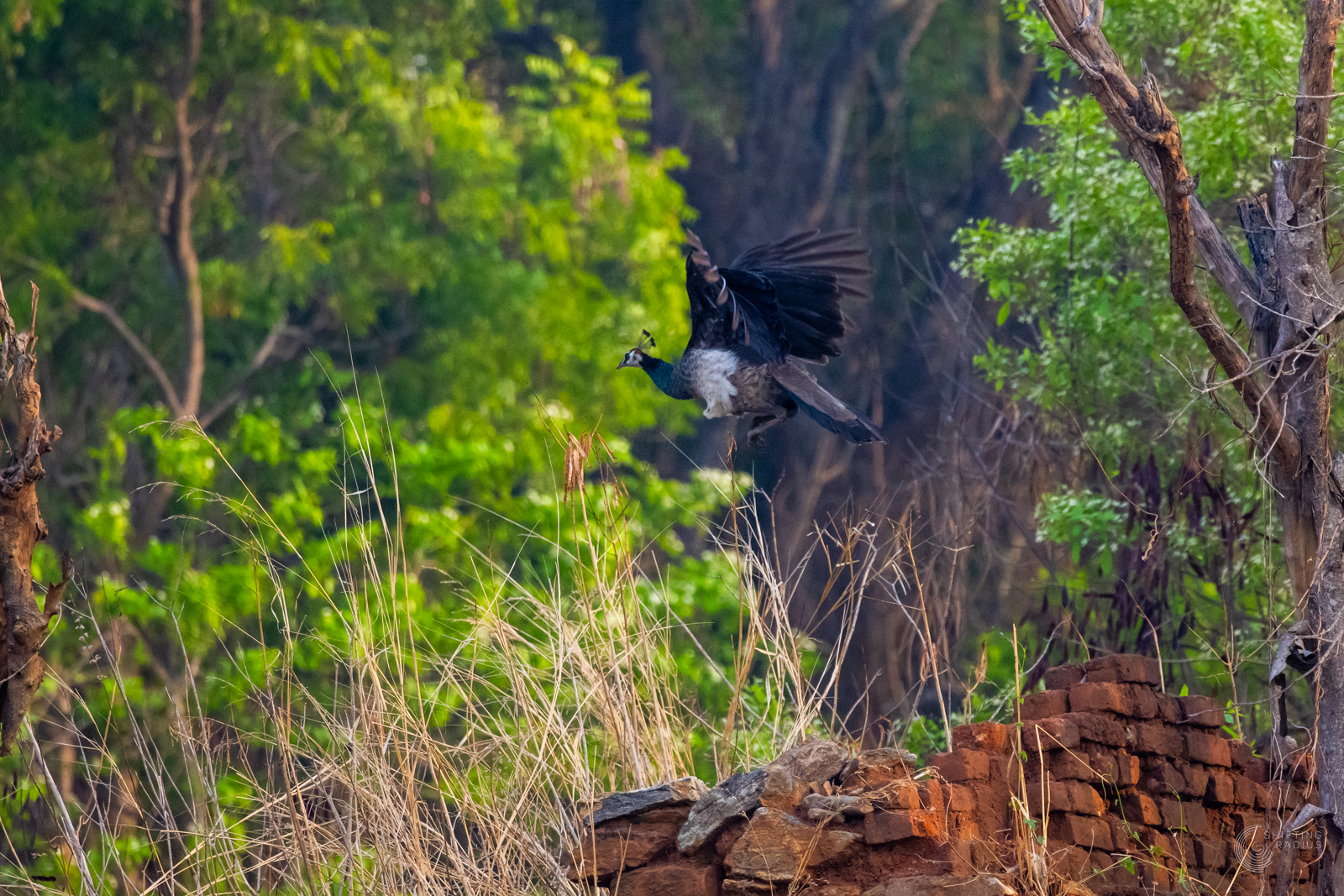
We clearly hadn’t gotten the memo about peafowls being common. Fifty-plus individuals across the morning, at a conservative count. The hornbills showed up too, and both made for some not-great shots and some very good memories.
Here’s the full list from the outing:
Red-whiskered Bulbul, Red-vented Bulbul, White-browed Bulbul, Coppersmith Barbet, Ashy Prinia, Green Bee-eater, Indian Grey Hornbill, Indian Peafowl, Red-rumped Swallow, Blue-faced Malkoha, Black Kite, Black-winged Kite, Brahminy Kite, Yellow-eyed Babbler, Yellow-billed Babbler, Red-naped Ibis, Baya Weaver, Black Drongo, White-throated Kingfisher, Asian Koel, Common Myna, Rose-ringed Parakeet, Red-wattled Lapwing, Cattle Egret, Spotted Dove, Rock Pigeon, Large-billed Crow, Indian Robin.
28 species. Several lifers for her. A decent morning by any measure.


Day 2
The second morning stayed local. We went around Malhar and found 25 species, which sounds modest until you remember that these are the birds most people walk past every day without registering. That gap between seeing and noticing is what birding slowly closes.
Rhea submitted her first eBird checklist from this outing. I didn’t make a big deal of it in the moment, but I think it’s worth noting here: that checklist is the start of a record. Every serious birder has one somewhere, a first entry that didn’t feel significant at the time. I’ll be quietly pleased to have been around for hers.
https://ebird.org/checklist/S334315767


Day 3
Kommaghatta lake on the third morning, and the water delivered.
Lakes have a way of concentrating activity in ways forests don’t. Everything is visible, everything has a reason to be there, and the feeding and nesting behaviour that’s easy to miss elsewhere becomes hard to ignore when it’s happening five metres from the bank.
25 species, with some of the more compelling ones doing exactly what you’d want them to: feeding, nesting, being unself-conscious about it.
Here’s the full list from Kommaghatta:
Little Grebe, Oriental Darter, Grey Heron, Purple Heron, Pond Heron, Black-crowned Night Heron, Little Cormorant, Indian Cormorant, Little Egret, Intermediate Egret, Painted Stork, Glossy Ibis, Black-headed Ibis, Grey-headed Swamphen, Bronze-winged Jacana, Spot-billed Duck, Eurasian Coot, Eurasian Moorhen, Common Kingfisher, White-throated Kingfisher, Ashy Prinia, Red-whiskered Bulbul, Purple Sunbird, Black Drongo, Common Myna.


Three days, three very different contexts. 28 species in the scrub, 25 in the neighbourhood, 25 at the lake. Rhea now has a list that spans habitat types, a first checklist on record, and 56 unique species she’ll recognise for the rest of her life. That’s not a bad outcome for a long weekend.

Rhea was also around for two Cobra rescues during her time here. She filmed the second one herself, start to finish. The videos are below. That’s some serious flex material for when school reopens.
Looks like you folks had good fun! The last line is too much!!
I hope Rhea didn’t say “SeeYa” after the 2 snake encounters 😉